


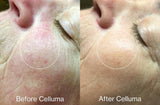
Treatment: One 30-minute, 2x per week for 4 weeks. No other modality used.
Using LED Red Light Therapy at Home
How it Works
Manage Pain at Home with LED Red Light Therapy
The Science of LED Light Therapy
BEFORE & AFTERS
Extraordinary Results

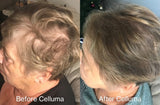

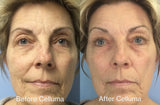
*Clinical proven results based on an independent study
At Home Protocols
Standard protocols vary depending on the type of condition you are trying to treat. See each condition page for specific protocols for acne, pain, hair restoration, body contouring, and healthy aging. Using Celluma LED light therapy devices is very relaxing. Settle into a comfortable position and wrap the treatment area with your Celluma. A single treatment lasts approximately 30 minutes. Most people experience immediate results. However, results vary depending on the severity of the condition and adherence to protocols. Statistics from research referenced below.
54 %
saw improvement in acne lesions with blue light acne treatment.
77 %
saw improvement in skin firmness after just 4 weeks of treatment.
66 %
saw improvement in facial wrinkles after just 4 weeks of treatment

Backed by Clinical Research
There are hundreds of studies documenting the benefits of light therapy and its positive impact on healthy aging. Celluma’s red light therapy is designed to truly change the way people rejuvenate and recover. We no longer need to rely solely on costly medications, risky injections, or invasive surgery now that we have the technology to give our bodies the boost to heal naturally. See a small sample of what the research says about light therapy for healthy aging.
-
Low-Level Light Therapy
4 studies
Keys to Effective Low Level Light Therapy (LLLT). Stanford School of Medicine, 2016
The Nuts and Bolts of Low-level Laser (Light) Therapy. PubMed, 2012
Mechanisms and applications of the anti-inflammatory effects of photobiomodulation. PubMed, 2017
Biphasic Dose Response in Low Level Light Therapy. PubMed, 2009.
-
Aging Skin
4 studies
Low Level Light Therapy with Light-Emitting Diodes for the Aging Face. Clinics In Plastic Surgery, 2016
Low Level Laser (Light) Therapy (LLLT) for Cosmetic Medicine and Dermatology. Photobiology.info, 2014
Light-Emitting Diodes (LEDs) in Dermatology. PDF: Elsevier, 2008
-
Pain Management
4 studies
Low-intensity LASER and LED (photobiomodulation therapy) for pain control of the most common musculoskeletal conditions. PubMed, 2022
Mechanisms and applications of the anti-inflammatory effects of photobiomodulation. PubMed, 2017
The Use of Low Level Laser Therapy (LLLT) For Musculoskeletal Pain. PDF: MedCrave, 2015
Short-term therapeutic effects of 890 nm light therapy for chronic low back pain, 2014. Full PDF | PubMed Abstract
-
Body Contouring
4 studies
Body Contouring Using Low Level Light Therapy, 2013. Full PDF | PubMed Abstract
Low-Level Laser Therapy for Fat Layer Reduction: A Comprehensive Review. Lasers Surg Med, 2014
Review of the Mechanisms and Effects of Noninvasive Body Contouring Devices on Cellulite and Subcutaneous Fat. PubMed, 2016
Efficacy of low-level laser therapy for body contouring and spot fat reduction. PubMed, 2011
-
Hair Growth
4 studies
Role of Low-Level Light Therapy (LLLT) in Androgenetic Alopecia. PubMed, 2021
Photobiomodulation for the management of alopecia: mechanisms of action, patient selection and perspectives. PubMed, 2019
Low-Level Laser (Light) Therapy (LLLT) for Treatment of Hair Loss. PubMed, 2014
The growth of human scalp hair in females using visible red light laser and LED sources. NIH, 2014
-
Acne
4 studies
Effect of Blue Light on Acne Vulgaris: A Systematic Review. Sensors (Basel), 2021
Blue and red light combination LED phototherapy for acne vulgaris in patients with skin phototype IV. Lasers Surg. Med., 2007
Utilization of light-emitting diodes for skin therapy: Systematic review and meta-analysis. Photoimmunology & Photomedicine, 2023
Visible Light in the Treatment of Acne Vulgaris. Journal of Cutaneous Medicine and Surgery, 2024
How to Choose the Right Red Light Therapy Device for You
WE'RE HERE TO HELP
Frequently Asked Questions
-
Low-level-light therapy or photobiomodulation is based on Light Emitting Diode (LED) technology and is the application of light energy to the body for therapeutic benefits. It promotes a natural photobiochemical reaction similar to the process of plant photosynthesis. The energy delivered by the LEDs has been shown to enhance cellular metabolism, accelerate the repair and replenishment of damaged skin cells, as well as stimulate the production of collagen — the foundation of healthy, smooth skin. Research has shown that LED light therapy may help smooth skin texture, improve skin firmness and resilience, increase lymphatic system activity, restore skin’s natural cellular activity, and reduce the appearance of fine lines, wrinkles, and superficial hyperpigmentation. The treatment is for all skin types, and is non-ablative, non-invasive, painless, and requires absolutely no downtime. Patients or clients can return to their normal activity immediately after the treatment.
-
LED devices are considered extremely low risk when used as intended.
-
Position Celluma as close to your skin as possible, the closer the better. One key advantage to Celluma is its patented flexible design, which allows for close positioning to the skin, and may lead to more effective results.
-
Based on extensive research, low-level-light therapy devices have been cleared by the
FDA, and shown to manage muscle spasm, hair restoration, body contouring, facial wrinkles and rhytids, minor muscle and joint aches, mild to moderate acne vulgaris, minor muscle, joint, and arthritic pain, pain and stiffness associated with arthritis, sub-optimal local blood flow and circulation, superficial, benign vascular and pigment lesions, minor chronic neck and shoulder pain of a musculoskeletal origin. -
Light therapy is non-invasive and painless when used as intended.
-
Absolutely! The closer to the skin the better. The only time you won’t want Celluma to touch the skin is when you are treating open wounds and concerned about cross-contamination. In these cases, we recommend using the Celluma disposable hygiene barriers.
-
Yes! Animals respond well to Celluma, and both Veterinarians and Certified Animal Chiropractors are using Celluma successfully to treat a variety of conditions. Unlike human use, where the FDA imposes restrictions, Celluma can be used on animals without restrictions.
-
Low-level light therapy is based on light emitting diode (LED) technology developed by NASA for manned space flight experiments. In comparison to lasers, LED technology generates negligible amounts of heat and is not considered anon-significant risk category by the FDA.
-
No, LASER machines are different than LED devices and generally not cleared for use in the home. However, there are different categories of LASERs. Cold and soft LASERs are categorized as low-level light therapy devices just like LED devices. LED and cold LASERs are cleared for the same indications. However, LASERs have inherent drawbacks including extremely small treatment areas, and they are much more expensive to manufacture and maintain. Some companies market their LED devices as LASERs which is both misleading and dangerous.

